How Much Table Depth Does One Person Need?
A single diner usually needs about 24 in of table depth for one place setting. Allow more room for serving dishes or a wide tabletop, and check the table's usable surface rather than relying on its outside depth alone.
On this page (7 sections)
- How much table depth does one person need?
- What else needs space on the tabletop?
- How does table shape affect usable depth?
- How does chair depth affect your table setup?
- How can you tell if a one-person table is deep enough?
- How much depth should you choose for two diners?
- Which table depth should you choose?
A single diner usually needs about 24 in of table depth for one place setting. That gives you room for a plate, utensils and a drink, with a modest edge gap at the front and back.
Treat 24 in as a starting point, not a fixed rule. A wide plate, place mat, laptop or serving dish can make a deeper surface more comfortable.
How much table depth does one person need?
Plan for about 24 in of usable depth when one person sits along one side of the table. Measure the top from the edge nearest the diner to the opposite edge, then check how much of that surface remains clear for the place setting.
The table's overall depth can be misleading if the edge curves inward or a centerpiece takes up the middle. For a rounded top, assess the surface directly in front of the seat.
| Use | Starting depth to consider |
|---|---|
| One plate and drink | About 24 in |
| Wide plate or place mat | More than 24 in |
| Meal with serving dishes | More than 24 in |
| Eating and working at once | Measure both setups together |
These are planning guides, not standards for every dish or dining style. Check the size of your actual plate and glass before you choose a table.
For a broader view of common table dimensions, see Standard Dining Table Size: The Common Dimensions. A one-person table also needs enough width along the edge, which our guide to table length per person covers.
How to measure a place setting from front to back
Measure the plate across its widest point, then add room for anything you want to keep beside or behind it. Include a place mat if you use one, as its edges can take up more space than the plate.
Set the plate, utensils and glass on a clear surface, then measure the full arrangement from front to back. Add a small margin so the plate does not sit right against the table edge.
Use your own dishes as the best fit check. Plate sizes and habits vary, so a tape measure and a quick mock-up can reveal whether a specific table depth will work for you.
What else needs space on the tabletop?
A plate is only one part of the dining area. Leave room for your drink and utensils, and count serving pieces or decor if they will stay on the table during meals.
A centerpiece can reduce the usable area even when the table is deep enough on paper. Keep the center clear if you want room to pass food or spread out a book or laptop.
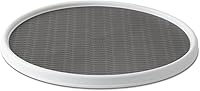
The Copco turntable organizer measures 18 in across, so it can take up a substantial part of a small tabletop. It may help organize items that you want to rotate within reach, but measure the remaining eating surface first.
For an occasional seasonal display, the Fun Express Easter centerpiece is 8.5 in long and 1.5 in wide. Its tabletop footprint is compact front to back, though it still takes space from the usable surface.
How does table shape affect usable depth?
A rectangular table gives you a fairly even front-to-back surface along its length. A round or oval table curves away at the edges, so the useful depth may vary depending on where you sit.
Measure across the spot where the chair will go rather than only at the center of the tabletop. If the edge curves sharply, place a plate there to see whether it sits comfortably without crowding the sides.
A pedestal base may leave more room for your knees, but the base can affect where you can place a chair. Check both the tabletop and the space below it before deciding.
How does chair depth affect your table setup?
Chair depth affects how far you sit from the table, while table depth determines the front-to-back room for your place setting. Check that the chair can pull in and that your knees fit beneath the table edge.
The Signature Design by Ashley Berringer dining chair measures 22.75 in deep. That measurement describes the chair, not the table clearance, so compare its position with the table apron and the space needed to sit comfortably.
How can you tell if a one-person table is deep enough?
Mock up your usual place setting before buying. Put a plate, glass and utensils on a surface at the table's planned depth, then sit down and check whether the setup feels cramped.
If you plan to use the table for both meals and another activity, mock up both at once. A table that fits a plate by itself may not leave room for a notebook, keyboard or serving bowl.
For a full set of dimensions to compare, read What Size Should a Dining Table for One Be?. The guide covers other sizing needs beyond front-to-back depth.
How much depth should you choose for two diners?
Two diners facing each other need space for both place settings, plus room between them. If the table will serve two people regularly, compare its depth and length with the seating arrangement before settling on a size.
Our How Long Should a Dining Table for Two Be? guide focuses on length, the dimension that determines how much edge space each person gets. Consider depth as well when dishes or decor will sit between diners.
Which table depth should you choose?
Choose about 24 in for a simple single-person place setting, and go deeper if you use wide dishes, place mats or tabletop items during meals. Measure your actual setup and confirm the usable surface at the seat before deciding.
Frequently asked questions
How deep should a table be for one person?
About 24 in of depth is a practical starting point for one place setting, with the plate centered and room for utensils and a glass. Choose more depth if you plan to keep serving dishes on the table, use wide place mats or share the surface with work items.
Is a 24 in deep table enough for one person?
A 24 in deep table can fit one place setting when the diner sits along one side and the surface is otherwise clear. Measure your plate, place mat and glass together, then leave a little space at the front and back so items do not feel crowded.
How much table depth does a plate need?
A dinner plate often measures around 10 to 12 in across, so the place setting needs additional room for utensils, a glass and a comfortable edge gap. Check your own dishes and add the space you want in front of and behind the plate.
Does table shape change the depth needed for one person?
Yes. A rectangular table offers a consistent front-to-back area.
A round or oval table narrows toward its edges.
Check the usable surface where the diner will sit, especially if the table has a pedestal or a curved edge.
How much table depth do two people need?
Two people seated opposite each other need enough depth for both place settings and a gap between them. Compare the planned table with our guide to two people table length and consider whether dishes will sit between the diners.