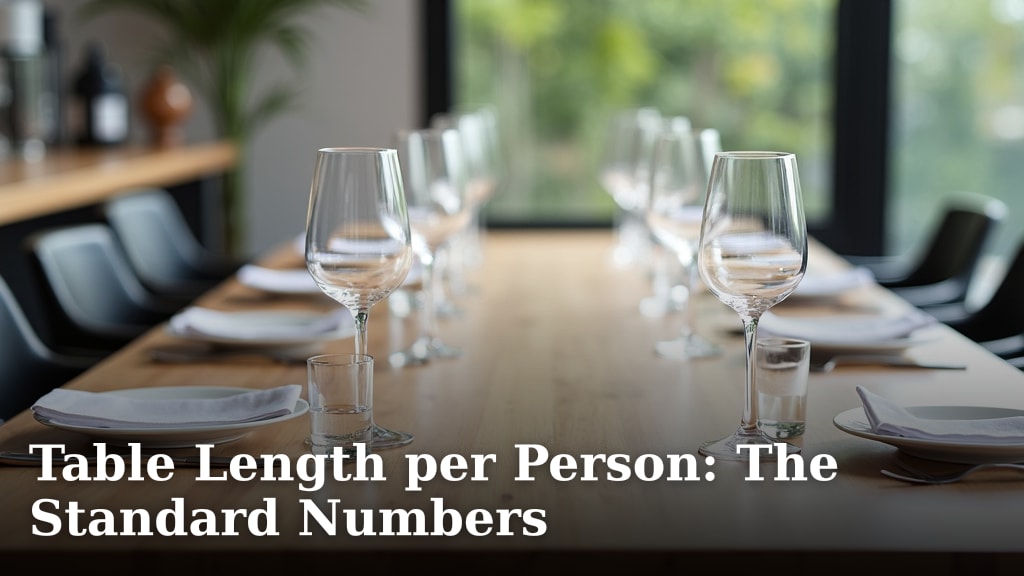
Table Length per Person: The Standard Numbers
For comfortable dining, each person needs approximately 24 inches of table length, along with about 15 inches of table depth. This standard ensures everyone has enough room to eat and move without feeling cramped. We’ve found that sticking to these numbers helps create an inviting dining experience.
You want guests to feel at ease, right? Planning for adequate table length per person prevents elbows from bumping and drinks from spilling. Whether it’s a casual dinner or a holiday feast, giving everyone their own comfortable space makes a big difference. We’ll show you how to measure up for any occasion.
TL;DR:
- Aim for 24 inches of table length per person.
- Provide 15 inches of table depth per person.
- These numbers are standard for comfortable dining.
- Proper spacing improves the guest experience.
Let’s dive into the details so you can perfectly plan your next gathering. We’ll cover various table shapes and sizes, too.
Optimal Table Space for Diners
Ensuring enough room at the table is key to a happy meal. We’ve learned that a few extra inches can transform a cramped dinner into a cozy gathering.
When planning your dining setup, think about both length and depth. Most people overlook depth, but it’s just as important for comfort. Do you want your plate touching the edge or falling off? Probably not!
Understanding the 24-Inch Rule for Length
The 24-inch rule for table length per person is a widely accepted standard. It provides space for a place setting, elbows, and a bit of wiggle room. Imagine trying to cut a steak without enough space; it’s a messy business.
This measurement allows for a standard dinner plate, a glass, and silverware. It also gives you enough room to turn and talk to the person next to you without invading their personal space. We found this number frequently cited in hospitality guides.
Why 24 Inches? The Comfort Factor
Why exactly 24 inches? Our research shows this number strikes a balance. It’s not so much that people feel too far apart, and not so little that they feel squished. It’s the sweet spot for an enjoyable dining experience.
This space helps prevent accidental bumps and spills, which can disrupt a meal. Nobody wants a drink knocked over during a holiday dinner. This standard minimizes those little stressors.
The Importance of 15 Inches for Table Depth
While length often gets the spotlight, table depth is your unsung hero. We recommend about 15 inches of depth per person. This allows for your plate, serving dishes, and a little breathing room in front of you.
Without adequate depth, you might find your plate too close to the edge. Or perhaps your water glass is constantly at risk. A good depth means you don’t feel like you’re eating on a ledge. It ensures everything fits comfortably on the table in front of you.
Different Table Shapes and Their Spacing Needs
Not all tables are created equal. Rectangular, round, and square tables each present unique spacing challenges and solutions. We’ll help you figure out what works best for your space.
Rectangular and Oval Tables: The Most Common Choices
Rectangular tables are generally the easiest to calculate for. You simply apply the 24-inch rule along the length. An 8-foot (96-inch) table can comfortably seat four people on each long side, plus one at each end, for a total of 10.
Oval tables are similar but offer a bit more fluidity. The curved ends can sometimes feel a little less rigid than a sharp corner. They often allow for slightly more flexible seating at the ends.
- 60-inch (5-foot) rectangle: Seats 4-6 people.
- 72-inch (6-foot) rectangle: Seats 6-8 people.
- 96-inch (8-foot) rectangle: Seats 8-10 people.
- 120-inch (10-foot) rectangle: Seats 10-12 people.
Round Tables: Fostering Conversation
Round tables are fantastic for conversation because everyone can see each other. However, calculating seating for them can be a bit trickier. We still apply the 24-inch principle around the circumference.
For example, a 48-inch diameter round table has a circumference of about 150 inches (pi x diameter). Dividing 150 by 24 gives you roughly 6.25, so it comfortably seats 6 people. A larger diameter means more seating.
| Table Diameter | Comfortable Seating | Max Seating (Snug) |
|---|---|---|
| 36 inches | 2-3 people | 4 people |
| 48 inches | 4-5 people | 6 people |
| 60 inches | 6-7 people | 8 people |
| 72 inches | 8-9 people | 10 people |
The “Sweet Spot” for Round Table Sizes
For round tables, the 60-inch diameter is often considered a sweet spot. It allows for a good number of guests while keeping conversations easy to manage. You won’t have to shout across the table. It’s a good choice for most family gatherings (National Kitchen and Bath Association).
Square Tables: Intimate Gatherings
Square tables are perfect for more intimate meals. They typically seat 4 people comfortably, one on each side. A standard 36-inch or 42-inch square table works well for this.
If you have a larger square table, say 60 inches, you might fit two people on each side for a total of 8. However, this often feels a bit tight, especially if serving dishes are on the table. We often find that square tables shine when not over-seated.
Factors That Influence Your Seating Calculations
While standard measurements are a great starting point, real-world situations often call for adjustments. A few things can change how much space each person truly needs.
Chair Size and Armrests
Your chairs play a huge role. Big, plush dining chairs with wide armrests take up more room than slender, armless chairs. We always recommend measuring your chairs before you commit to a table size.
If your chairs are wider than 20 inches, you’ll need to increase that 24-inch per person estimate. Armrests can add another 2-4 inches per seat, so factor that in. It’s about ensuring chairs can slide in and out easily.
Type of Meal and Serving Style
Are you serving a formal, multi-course meal with many dishes and glassware? Or is it a casual pizza night? The type of meal affects how much table space you need.
Family-style meals, where serving platters are placed directly on the table, demand more depth and sometimes more length. If you’re serving buffet style or plating in the kitchen, you can get away with slightly less space per person. Think about your typical dining habits.
Guest Comfort vs. Maximizing Seating
This is the age-old dilemma, isn’t it? Do you squeeze in extra guests, or do you prioritize everyone’s comfort? We usually lean towards comfort, especially for longer meals.
While you can often fit one or two more people than the comfortable standard, it might lead to a less enjoyable experience. Bumping elbows and feeling squashed can make guests want to leave sooner. Consider your priorities for each gathering; sometimes a snug fit is acceptable for a short meal.
Your Table Planning Checklist
Here’s a quick guide to help you plan your table seating effectively. Following these steps will help you avoid common pitfalls and ensure a comfortable experience for everyone.
- Measure your current table’s length and width.
- Measure the width of your dining chairs, especially with armrests.
- Consider the typical type of meals you host (formal, casual, family-style).
- Decide if you want to prioritize comfort or maximum seating.
- Account for any leaves or extensions your table might have.
- Sketch out your seating arrangement mentally or on paper.
Taking these simple steps can save you a lot of headache. A little planning goes a long way in creating a warm and welcoming dining area.
Conclusion
You now have the standard numbers for comfortable dining: 24 inches of length and 15 inches of depth per person. We’ve found these guidelines make a big difference. Whether you host often or just for special occasions, proper spacing ensures everyone feels relaxed and welcome.
Remember to consider your table shape, chair size, and serving style. Prioritizing guest comfort over squeezing in extra seats often leads to a more enjoyable experience for all. Use this information to confidently plan your next gathering and create memorable meals.
Frequently Asked Questions
How much space is needed behind a dining chair?
You should aim for at least 36 inches of clearance between the back of a dining chair and any wall or furniture. This allows guests to pull out their chairs and sit down comfortably without feeling cramped. More space, around 42-48 inches, is even better if you want people to walk behind seated diners.
Can I use less than 24 inches per person if I’m short on space?
Yes, you can, but it will be a snug fit. While 24 inches is the standard for comfort, you can go down to about 20 inches per person for very casual, shorter meals. Just be aware that guests will have less elbow room and the table might feel crowded, especially with serving dishes.
Does the type of food affect how much table space I need?
Absolutely. If you’re serving a formal meal with multiple courses, larger plates, and extra glassware, you’ll want to stick to or even exceed the 24-inch length and 15-inch depth recommendations. For simple, casual meals with fewer items on the table, you might manage with slightly less space per person.
What if my dining chairs have armrests?
Chairs with armrests will generally require more space. Measure the total width of your chairs at the widest point, including the armrests. You may need to increase the 24-inch per-person estimate to ensure chairs don’t bump into each other. Armrests can add 2-4 inches to the chair’s effective width.
Is it better to have a slightly larger table than needed?
If space allows, a slightly larger table is generally a good idea. It provides more flexibility for different types of gatherings, serving styles, and future chair purchases. A bit of extra room ensures guests feel comfortable and relaxed, which enhances the dining experience for everyone.