What Table Length Is Comfortable for Conversation?
A comfortable conversation table length keeps diners close enough to hear one another without crowding seats or centerpieces. For most homes, choose a length that fits your usual group and leaves room for chairs to pull out.
On this page (7 sections)
- What table length is comfortable for conversation?
- Does table shape change how easily people talk?
- How do you balance seating and distance?
- Can a centerpiece get in the way of conversation?
- Can shared dishes make a long table harder to use?
- How should chairs fit around the table?
- How do you choose a comfortable conversation table length?
A comfortable conversation table length lets diners hear and see one another without crowding seats or stretching across the table. Choose a size that fits your usual group, leaves room for chairs, and keeps the distance between people manageable.
Table length alone doesn't determine how easy it is to talk. Shape, seating position, chair width, and anything placed in the center all affect how connected diners feel.
What table length is comfortable for conversation?
Choose a table that fits the people who eat together most often, with enough room for each place setting. If you usually dine alone, see standard table size for one person.
A table that's much longer than your usual group needs can leave people far apart, while a crowded one makes it harder to settle in.
Start by counting your everyday seats, then consider how often you host extra diners. The standard dining table size guide can help you compare common dimensions with the space you have.
A flexible table can suit changing group sizes, but leaves and extensions should be easy to manage. Think about the size you use most days, not only the largest gathering you host once or twice a year.
Does table shape change how easily people talk?
Round and square tables keep diners at more similar distances from one another. A long rectangular table works well for bigger groups, but people at opposite ends may have to speak louder or turn toward the center.
Round tables have no far corners, which can make it easier to face other diners. Rectangular tables offer more seating along their sides, but check that the table doesn't stretch beyond the distance where your group can comfortably hear across it.
Your room layout matters too. A table pushed against a wall may make one seat hard to reach, while a central position gives diners room to pull out chairs and sit facing one another.
How do you balance seating and distance?
Allow enough length for the chairs and place settings you actually use, then check that diners aren't packed tightly together. For a solo place setting, see table depth for one person.
Chair width, armrests, and serving dishes all affect how much space a meal needs.
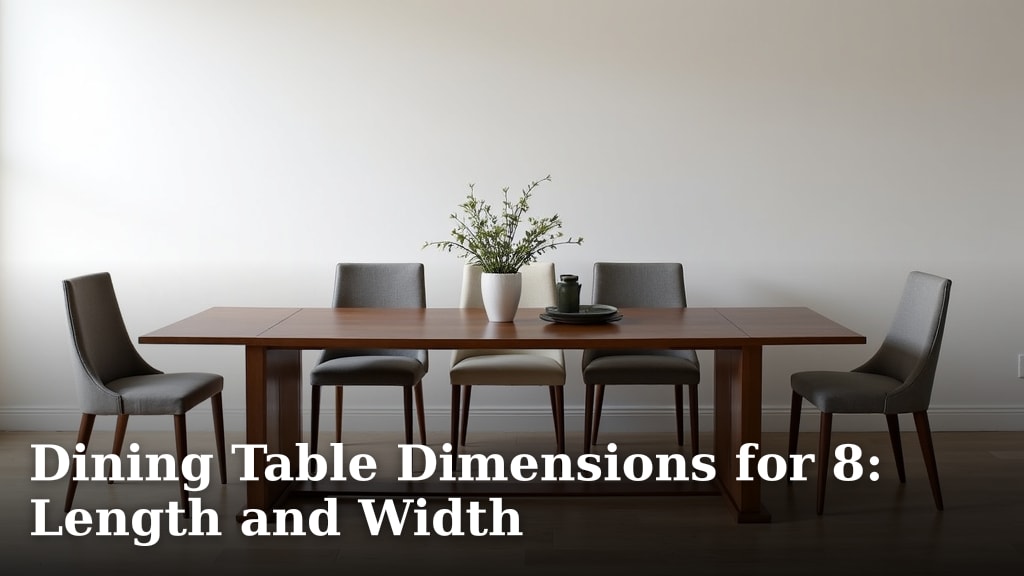
For a larger group, use the dining table dimensions for 8 guide to compare seating needs and table proportions. If you usually eat as a pair, see how long a dining table for two should be before deciding that a larger surface is necessary.
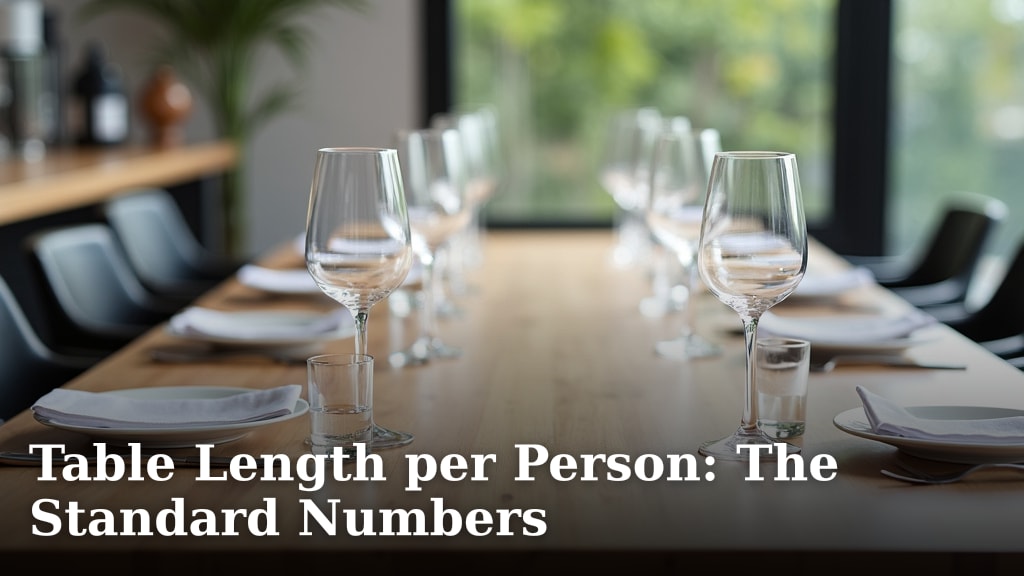
The table length per person guide offers another way to estimate space along the edge. Treat any general measurement as a starting point, then compare it with your own chairs and place settings.
Can a centerpiece get in the way of conversation?
Keep centerpieces low and narrow so they don't block faces or use up the space needed for shared dishes. A table can have enough length on paper and still feel awkward if decor divides the group.
A compact seasonal accent can add color while leaving room for conversation. The Fun Express Easter bunny and egg centerpiece is 8.5 inches long, so consider its footprint against your serving space.
For everyday meals, put decor aside when the table is busy. If guests need to look around an object to see one another, it is too tall or too central for that setup.
Can shared dishes make a long table harder to use?
Shared dishes are easier to reach when they don't sit beyond a comfortable arm's reach. On a longer table, diners may need serving bowls placed in more than one spot instead of one large centerpiece in the middle.
A rotating tray can keep condiments or small shared items accessible without asking someone to pass them along the full table. The Copco turntable organizer has an 18 inch diameter, a non-skid surface, and a rimmed edge.
Leave enough clear space for plates and serving dishes, and don't overload the turntable. It may help organize a spread, but it doesn't change the distance between seats.
How should chairs fit around the table?
Check that chairs slide in and out without forcing diners to squeeze past one another. Comfortable conversation depends on being able to sit down, turn toward other people, and reach the table without a tight fit.
The Signature Design by Ashley Berringer chairs have an armless design and are described as sliding under standard tables. Their cushioned seats and spindle backs may suit a dining setup where chairs need to tuck away between meals.
Measure chair width and depth, then account for the space they need when pulled out. A table that fits the room with chairs tucked in may still leave too little space for people to sit comfortably.
How do you choose a comfortable conversation table length?
For a comfortable conversation table length, start with your regular number of diners, then check the shape, chair fit, and room layout. Choose a round or compact shape when keeping everyone near one another matters most, and use a longer table when your group needs more seats.
Keep the center clear enough for people to see one another and reach shared dishes. Compare your everyday setup with the table length per person guide before settling on a size.
Frequently asked questions
What table length is best for conversation?
A table that seats your usual group without leaving large gaps is often easiest for conversation. Shape and seating matter as much as length: a round table keeps everyone near the center, while a long rectangular table may make conversation harder between people at opposite ends.
Is a round table better for conversation?
A round table can make conversation easier because diners face one another and sit at similar distances from the center. It still needs enough room for each place setting and chairs to move freely, so measure the room and account for the table's full diameter.
How much table space does each person need?
Plan for enough width along the edge for each person to sit without bumping elbows or crowding place settings. The right amount depends on chair size, serving dishes, and how you eat; use your usual place settings as a practical guide before choosing a table.
Do centerpieces make conversation harder?
Tall or wide centerpieces can block sightlines and take up shared space, even when the table length fits the group. Keep decor low and compact, or move it aside during meals, so diners can see one another and pass dishes comfortably.