Standard Dining Table Size: The Common Dimensions
On this page (8 sections)
The standard dining table size for a four-person rectangular table is typically 48 inches long by 30 inches wide. For a round table seating four, aim for a diameter of about 36 to 44 inches. These dimensions ensure enough elbow room and space for plates without feeling cramped. Finding the right size is key to comfortable dining.
When choosing a dining table, consider not just the number of people it seats, but also the shape of the table and the available space in your dining area. Rectangular tables are common, but round, square, and oval shapes offer different advantages for various room layouts and seating needs. Always measure your room to ensure a proper fit and flow.
- Rectangular tables for 4: Around 48″ L x 30″ W.
- Round tables for 4: Diameter of 36″ to 44″.
- Consider table shape for your space.
- Measure your room before buying.
- Allow for chair pull-out space.
Let’s walk through the common dimensions for different dining table sizes and shapes so you can find the perfect fit for your home.
Finding the Right Dining Table Size for Your Space
Choosing a dining table might seem straightforward, but the right dimensions make all the difference. You want a table that fits your room and your lifestyle. It should feel comfortable for everyday meals and spacious enough for special gatherings. Let’s look at the common sizes and what works best.
Understanding Dining Table Dimensions
The size of your dining table impacts how your room feels and functions. Too big, and it crowds the space. Too small, and everyone feels cramped. We’ve found that a little planning goes a long way in preventing buyer’s remorse. Think about how many people you usually host and the shape of your dining area.
Key Factors to Consider
Before you even look at tables, measure your dining space. You need enough room for the table itself, plus space for chairs to be pulled out. Many designers recommend at least 3 feet (36 inches) of clearance around the table. This allows people to walk behind seated guests comfortably (National Extension University).
Chair Clearance: The Unsung Hero
When you pull a chair out from the table, you need space for someone to sit down and get up. We found that a minimum of 24 inches behind each chair is usually sufficient for comfortable movement. If you have a high-traffic area or a smaller room, you might want to add a few extra inches.
Tablecloth and Place Setting Space
Don’t forget to account for tablecloths! They add a few inches to the overall footprint. Also, consider your place settings. A standard dinner plate needs about 12 inches of space. Add in glasses, silverware, and serving dishes, and you’ll see why table width is so important.
Common Dining Table Sizes by Seating Capacity
Most dining tables are sold based on how many people they can seat. Here are the general dimensions you’ll encounter for different seating numbers. These are great starting points when you’re browsing. Learn about the standard table length per person for comfortable dining.
Tables for Two to Four People
For smaller households or intimate dining areas, tables designed for two to four people are ideal. For exact measurements, see our guide to four-person table size. A round table is often a good choice here, encouraging conversation. For a 36-inch round table, you can typically seat two comfortably. Increase that to 40-44 inches, and you can easily fit four.
If you prefer a rectangular table for four, aim for lengths between 48 and 60 inches. The width should be around 30 to 36 inches. This gives everyone enough elbow room. We found that a 48″ x 30″ table is a very popular choice for four.
Tables for Four to Six People
When you need to seat a few more guests, you’ll want a larger table. For a rectangular table seating four to six, look for lengths around 60 to 72 inches and a width of 36 to 40 inches. This provides enough space for place settings and maybe a small centerpiece. For a larger gathering, review dimensions for eight diners.
A round table that seats four to six should have a diameter of about 48 to 60 inches. Keep in mind that larger round tables can sometimes make it hard to reach food from the center. For six people, a 48-inch round table might feel a bit snug, so 54-60 inches is often better.
Tables for Six to Eight People
Hosting larger dinner parties? Tables for six to eight people are what you need. A rectangular table that seats six to eight typically measures 72 to 84 inches long and 36 to 42 inches wide. This length allows ample space for everyone’s dishes and serving bowls.
If you’re considering a round table for eight, you’ll need a generous diameter of 60 to 72 inches. Again, reaching the middle can be a challenge with tables this size, so consider that when planning your seating chart.
Tables for Eight to Ten People
For truly grand entertaining, tables seating eight to ten are the answer. Rectangular tables in this category often start at 84 inches long and can go up to 108 inches or more. The width usually stays between 40 and 44 inches to ensure comfortable seating.
Round tables for eight to ten are quite rare and require a very large space. You would likely need a diameter of 72 inches or more. Many people opt for rectangular or oval shapes for larger groups to better manage space and reachability.
Dining Table Shapes and Their Footprint
The shape of your dining table isn’t just about aesthetics; it greatly affects how many people can sit comfortably and how the table fits within your room. We’ve seen that each shape has its own advantages.
Rectangular Dining Tables
Rectangular tables are the most common type found in homes. They work well in most dining rooms, especially those that are longer than they are wide. They are efficient for seating, as you can place chairs along all sides. You can also easily push them against a wall if needed, though this reduces seating.
Round Dining Tables
Round tables are excellent for promoting conversation because everyone can see each other. They don’t have sharp corners, which can be safer, especially in homes with young children. They can also make a room feel more open. However, they can sometimes be less space-efficient than rectangular tables, and reaching the center can be difficult on larger sizes.
Square Dining Tables
Square tables are perfect for smaller, more intimate dining spaces or for seating exactly four people. Like round tables, they encourage conversation. They can also fit nicely in square rooms. For seating more than four, square tables can become awkward, as adding chairs might require an unusually large surface.
Oval Dining Tables
Oval tables are a bit like rectangular tables in that they offer good seating capacity along the sides. However, their rounded ends make them feel less imposing and can improve traffic flow around the table. They are a great compromise if you like the idea of a rectangular table but want softer edges and better maneuverability.
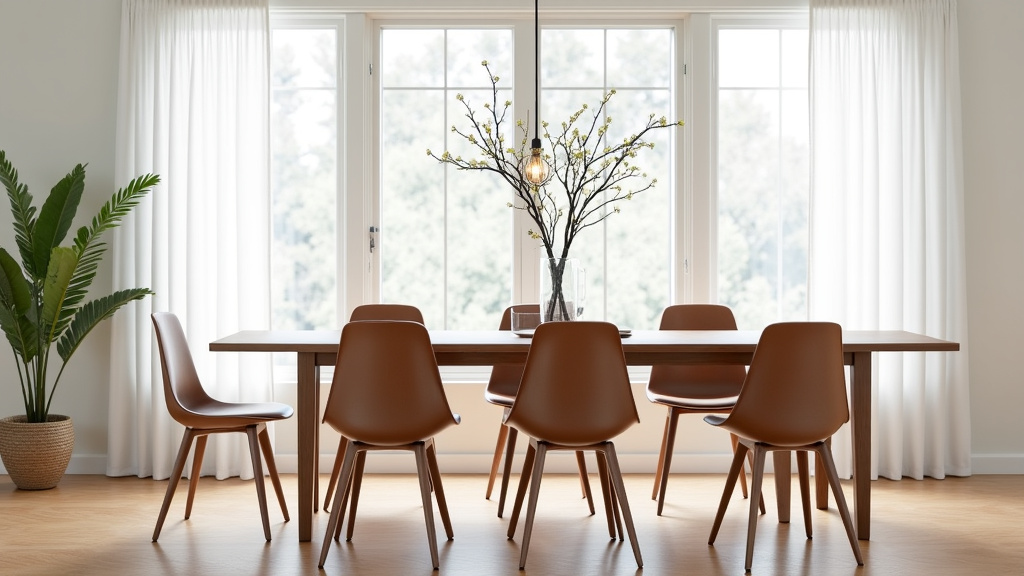
A Quick Reference Guide to Table Sizes
To make things easier, here’s a handy table summarizing common dining table dimensions. This should help you visualize what might fit in your home.
| Number of People | Shape | Approximate Dimensions |
|---|---|---|
| 2 | Round | 24″ – 36″ diameter |
| 2-4 | Round | 36″ – 44″ diameter |
| 4 | Rectangular | 48″ – 60″ L x 30″ – 36″ W |
| 4 | Square | 36″ – 44″ square |
| 4-6 | Round | 48″ – 60″ diameter |
| 6 | Rectangular | 60″ – 72″ L x 36″ – 40″ W |
| 6-8 | Rectangular | 72″ – 84″ L x 36″ – 42″ W |
| 8 | Round | 60″ – 72″ diameter |
| 8-10 | Rectangular | 84″ – 108″ L x 40″ – 44″ W |
Your Dining Table Shopping Checklist
Before you commit to a table, run through this quick checklist. It covers the essentials to ensure you make the best choice for your home and your needs.
- Measure your dining room carefully.
- Add at least 3 feet of clearance around the table for walkways.
- Consider how many people you usually need to seat.
- Think about the shape of your room and how the table will fit.
- Factor in space for pulled-out chairs (at least 24 inches behind each).
- Visualize place settings and serving dishes to gauge width needs.
Conclusion
You’ve learned that choosing the right dining table size involves more than just counting seats. We found that considering your room’s dimensions and ensuring enough space for chairs to move is key. Remember to allow about 3 feet around the table for easy movement and at least 24 inches behind each chair. By measuring your space and thinking about your typical seating needs and preferred table shape, you can confidently select a table that enhances your dining experience. Your next step is to measure your dining area and compare it with the dimensions we’ve outlined.
Frequently Asked Questions
How much space do I really need around my dining table?
You’ll need at least 3 feet of clear space around your entire table. This allows people to walk behind seated guests comfortably. We also found that you need about 24 inches of space behind each chair for it to be pulled out and used easily.
What’s the difference in space needed for a round vs. rectangular table?
Round tables can sometimes feel more intimate and don’t have sharp corners, but they can be less efficient in square rooms. Rectangular tables are often better for long rooms and can seat more people in a straight line. We found that both shapes require similar clearance around them for chairs and walkways.
Can I fit a larger table if I have a smaller dining room?
You can often make a slightly larger table work in a smaller room by choosing a visually lighter design, like a pedestal base. However, you must maintain the recommended clearance for chairs and walkways. If you can’t achieve at least 3 feet of clearance, you might want to consider a smaller table or a different shape.
How do serving dishes and place settings affect table size?
Serving dishes and place settings take up more room than you might think. We suggest measuring your everyday dinnerware and any serving platters you use. Ensure your table’s width is sufficient, generally at least 30 inches, to comfortably accommodate these items alongside seating.
Is a square table a good option for more than four people?
Square tables work best for seating four people comfortably, as they encourage conversation. For six or more people, a square table can become awkward. We’ve seen that reaching the center or passing dishes can be difficult. Rectangular or oval tables are usually a better choice for larger groups.


