How to Choose Carved Table Edge Styles
Choose a carved table edge style by balancing its profile, cleaning needs, and how you use the table. Shallow details are easier to wipe, while deeper grooves and ornate cuts add more visual texture and need closer attention during cleaning.
On this page (7 sections)
- Which carved table edge styles are easiest to live with?
- How does carving depth affect cleaning?
- Which carved edge feels comfortable at a dining table?
- How should carved edges fit the table's style?
- What should you check before choosing a carved table?
- Which useful tabletop pieces work alongside carved edges?
- How do you choose between subtle and ornate carving?
Carved table edge styles suit different rooms and routines, so choose a profile that feels comfortable, fits the table's look, and is practical to clean. Shallow carving is a simple choice for regular meals, while deeper ornament gives the edge a stronger decorative role.
The edge can change how a table looks without changing its basic shape. Compare the profile, carving depth, and finish before deciding which details are worth maintaining.
Which carved table edge styles are easiest to live with?
Shallow, smooth profiles with few recesses are usually easiest to wipe and use every day. Deep cuts add more visible detail, but crumbs and spills can settle in grooves that take extra care to clean.
Start by looking at the edge from above and from the side. A profile may appear subtle from above but feel more pronounced where your forearms rest.
| Edge detail | Appearance | Cleaning and daily use |
|---|---|---|
| Lightly rounded carving | Soft, quiet outline | Few places for crumbs to collect |
| Beaded or repeated grooves | Traditional, rhythmic detail | Wipe along each narrow channel |
| Deeply carved scrolls or leaves | Ornate, high-contrast edge | More recesses to check after meals |
| Carved apron below the top | Decorative effect beneath the edge | Less likely to catch food on the tabletop |
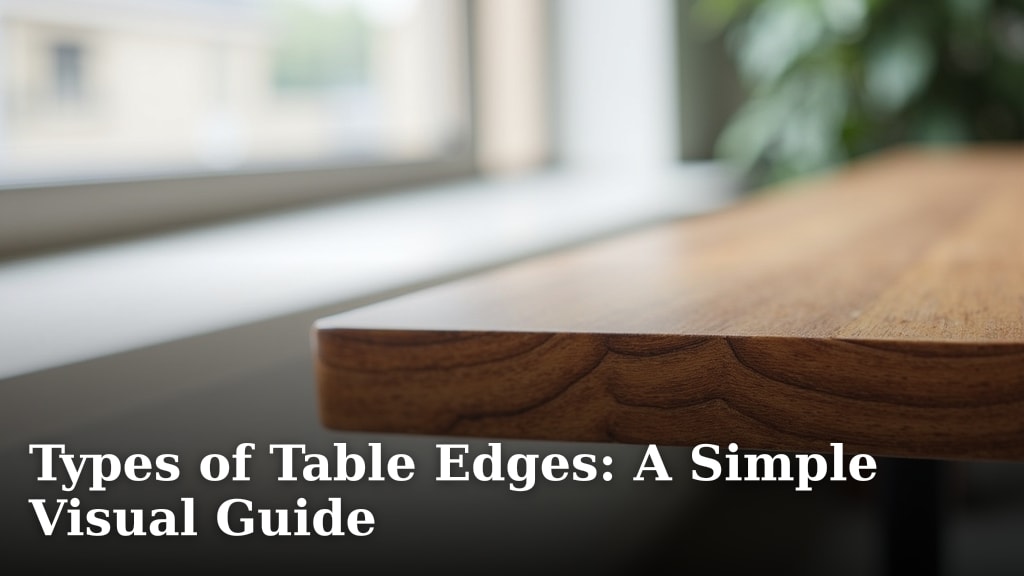
The terms used for carved profiles can vary between makers. For a broader visual overview, see Types of Table Edges: A Simple Visual Guide.
How does carving depth affect cleaning?
The deeper and more numerous the grooves, the more carefully you'll need to wipe the edge. A smooth cloth can pass over a shallow detail quickly, while a detailed profile may need a cloth corner or soft brush to reach its recesses.
Think about the messes your table sees most often. If children eat there, or if meals often include sticky sauces, a restrained edge can make cleanup simpler.
Use the finish and care instructions for the table itself. Avoid assuming that all carved wood can be cleaned with the same product or amount of moisture.
A glass cover may help protect the tabletop surface, but it won't cover every carved edge or replace care of the wood. Compare fit and coverage with our guide to best glass top for dining room table.
Which carved edge feels comfortable at a dining table?
The best edge is one you can sit beside without a sharp ridge pressing into your arms or legs. Check the transition from the flat tabletop to the carved portion, especially if diners sit close to the edge.
If you can inspect a table before buying, rest your forearms near the edge and move your hands along the profile. A decorative lip may look appealing but feel awkward if it projects sharply.
Also check whether the carving reduces the flat surface area near the edge. This matters when you set plates, lean on the table, or place a table protector.
How should carved edges fit the table's style?
Match the carving's detail to the table base and the room's overall feel. For help deciding whether a table suits a kitchen or dining area, read dining table vs kitchen table.
Repeated beads and shallow curves often pair well with traditional furniture, while a restrained profile can work in a simpler room.
The tabletop, legs, finish, and carving should read as one design. A heavily carved edge can compete with ornate legs, while a subtle edge may leave a decorative base as the main feature.
For inspiration across shapes and room styles, browse these kitchen table ideas. If you're choosing a specific shape, compare how the edge works with an oval dining table or a more formal refectory table in a modern kitchen.
What should you check before choosing a carved table?
Inspect the profile, finish, underside, and cleaning access before you settle on a table. These details help you tell whether the carving is comfortable and manageable for your household.
Use this short checklist:
- Trace the profile visually: look for sharp corners, rough transitions, or grooves that are hard to reach.
- Check the finish: confirm the care instructions suit the way you'll use the table.
- Inspect the underside: an apron can add decoration without crowding the tabletop edge.
- Think about protection: check whether your tablecloth or protector lies flat over the edge.
- Compare with the base: make sure the top's carving complements the legs and supports.
If you're building a table, edge carving can be part of the design from the start. Our how to make a pallet table guide offers a starting point for a DIY project.
best dining table kits can help if you want a ready-to-assemble option. For a solid wood top, compare the details in our best solid wood dining table guide.
Which useful tabletop pieces work alongside carved edges?
Choose tabletop accessories that fit the space and don't hide details you want to see. A small organizer can keep frequently used items together, while a seasonal centerpiece can add color without covering the full edge.
How do you choose between subtle and ornate carving?
Pick a subtle edge for simpler cleaning and a quieter look; choose ornate carving when the profile is a feature you want to notice and maintain. Comfort and the room's other details should guide the final choice.
A shallow profile is a practical fit for frequent meals and busy cleanup. If you are furnishing a smaller household, compare dining table sets for four.
A deeper carved edge may suit a formal dining space where its detail can stand out.
Compare a few profiles in the same light and from the same viewing distance. The right carved table edge style is the one that looks at home with the table and feels easy to use every day.
For complete dining setups, compare dining table and chair sets.
Frequently asked questions
What carved table edge is easiest to clean?
A shallow, rounded profile with few grooves is usually easiest to wipe because it has fewer narrow recesses to catch crumbs or spills. If you like a more detailed edge, check how deep the cuts are and whether you can reach them with a cloth.
Do carved table edges work for everyday dining?
Yes, carved edges can work for everyday dining if the profile feels comfortable against your arms and is simple enough to clean for your routine. Inspect the edge in person when possible, and consider how often food or liquid may reach its grooves.
Are carved edges suitable for a small kitchen?
They can suit a small kitchen, but the profile should fit the room's visual weight and the way people move around the table. A restrained carving tends to draw less attention than a deep, ornate edge, while the table's footprint matters most for clearance.
How do I compare carved table edge styles?
Compare the edge's shape, depth, smoothness, cleaning access, and comfort where your arms rest. Look at the profile from above and from the side, then consider whether it fits the table's wood, leg style, and the formality of your room.