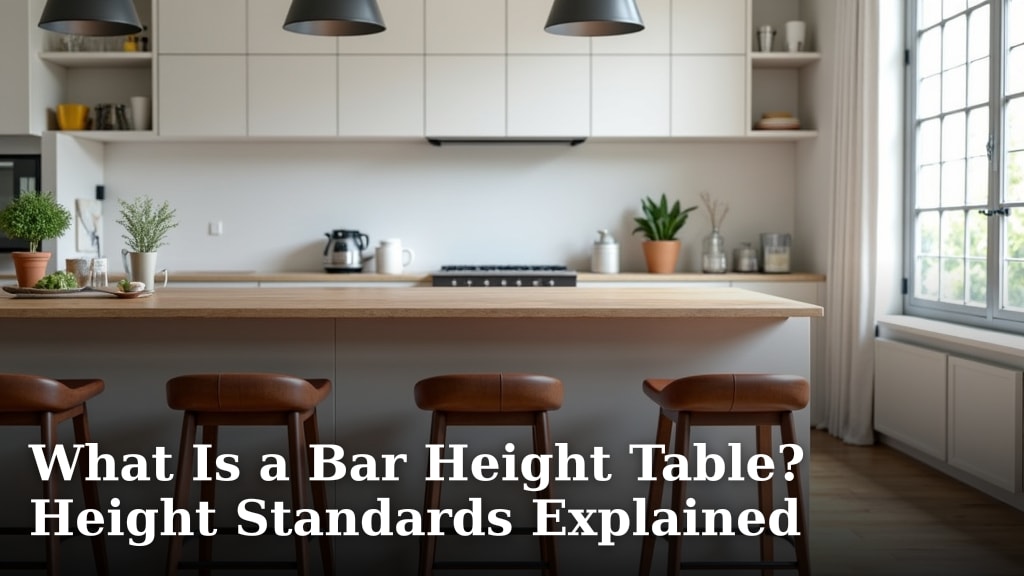
What Is a Bar Height Table? Height Standards Explained
A bar height table is a tall table, typically standing around 40 to 42 inches high. It’s designed to be paired with bar stools, offering a comfortable seating and dining experience that’s a bit more casual than a standard dining set. You’ll often find them in kitchens, home bars, or as a space-saving solution for smaller dining areas.
These tables create a more open and airy feel in a room compared to traditional dining tables. Their height also makes them versatile for both casual meals and entertaining guests. We’ve found that choosing the right bar height table can really transform the functionality of your space.
- Bar height tables are about 40-42 inches tall.
- They are meant to be used with bar stools, not regular chairs.
- They are great for casual dining and adding a modern look.
- Make sure to measure your space and stool height for a good fit. Make sure to measure your space and stool height for a good fit, and consult our guide on table length per person for optimal spacing.
Ready to find the perfect fit for your home? Below, we’ll break down exactly what makes a table bar height and how to choose the best one for your needs.
“`htmlUnderstanding Bar Height Tables: Dimensions and Design
So, what exactly makes a table a bar height table? It’s all about the size, especially how tall it is. We’ve found that these tables sit higher than your average dining table. This extra height is their defining feature.
Bar height tables typically measure between 40 and 42 inches from the floor to the tabletop. This is a key measurement to remember. It sets them apart from other table types and dictates what kind of seating you’ll need.
Comparing Table Heights: Where Bar Height Fits In
To really grasp the concept, let’s see how bar height tables stack up against others. Think of them as the tall members of the table family. They offer a different experience and function.
Standard Dining Table Height
A standard dining table is usually around 28 to 30 inches high. This is the height you’re probably most familiar with. It’s designed for comfortable seating with regular dining chairs.
Counter Height Table Difference
Then there’s the counter height table. These tables fall in between. They typically stand between 34 and 36 inches tall. They’re a popular choice, often paired with counter stools. They offer a slightly more casual vibe than dining tables.
Bar Height: The Tallest of the Bunch
And then, we have our bar height tables. As we mentioned, they are the tallest at 40 to 42 inches. This height is deliberately chosen to mimic the height of a bar or pub counter. It’s meant for a higher seating experience.
| Table Type | Approximate Height | Typical Seating |
|---|---|---|
| Dining Table | 28-30 inches | Dining Chairs |
| Counter Height Table | 34-36 inches | Counter Stools |
| Bar Height Table | 40-42 inches | Bar Stools |
The Perfect Pairing: Bar Stools for Bar Height Tables
The height of a bar table means you can’t just use any chair. You need seating that matches its elevation. This is where bar stools come in. Research and common sense tell us that the seat height is the most critical factor.
For a 40-inch bar height table, you’ll want bar stools with a seat height of about 28 to 30 inches. For a 42-inch table, aim for stools around 30 inches. This allows for about 10 to 12 inches of legroom between the seat and the tabletop. This space is essential for comfortable dining or conversation. It prevents you from feeling cramped.
We found that when shopping for stools, you should look for the “bar stool” designation. This term usually indicates the correct seat height. Always double-check the product dimensions before buying. It’s an easy way to ensure a good match and avoid disappointment.
Why Choose a Bar Height Table? Benefits and Uses
So, why would you opt for a taller table? Bar height tables bring a lot to the table, pun intended. They offer unique advantages for various spaces and lifestyles. We’ve seen them become increasingly popular for good reason.
Creating an Open and Airy Atmosphere
One of the biggest draws of bar height tables is how they can make a space feel larger. Because they are tall and often have slender legs, they don’t block sightlines. This visual openness can make a small kitchen or dining nook feel more spacious. It’s like magic for your square footage!
Think about it: a traditional dining table can feel like a big block in a room. A bar height table, with its slim profile and elevated stance, seems to take up less visual real estate. This can be a game-changer for smaller homes or apartments.
Ideal for Casual Dining and Entertaining
Bar height tables naturally lend themselves to a more relaxed vibe. They are perfect for casual breakfasts, quick lunches, or a spot for guests to gather while you cook. This informal setting encourages conversation and a laid-back atmosphere.
Many people love using them for entertaining. Instead of everyone crowding into the kitchen, they can perch at the bar height table. It keeps them involved without being underfoot. Plus, it adds a touch of sophistication, like your own personal bistro.
Space-Saving Solutions
In smaller homes, every inch counts. Bar height tables can be an excellent solution for maximizing your living area. They can fit into tighter corners or alcoves where a traditional dining set might not. Some designs even have built-in storage or are extendable, adding to their practicality. Some designs even have built-in storage or are extendable, adding to their practicality, and you can learn more about extendable designs in our guide to butterfly leaf tables.
We often see them used as a way to define different zones in an open-plan living space. A bar height table can act as a natural divider between a kitchen and a living area. It serves a function while keeping the space feeling open.
Versatility in Placement
Beyond kitchens and dining areas, bar height tables are incredibly versatile. They are a natural fit for home bars, of course. But you can also find them on patios, in game rooms, or even as a standing desk alternative. Their adaptability makes them a smart choice for many homeowners.
Factors to Consider When Choosing Your Bar Height Table
Now that you’re convinced a bar height table might be the right fit, let’s talk about making your selection. It’s not just about the height; several other elements play a role in finding the perfect piece for your home. We want you to make an informed choice.
Measure Your Space Carefully
This is perhaps the most important step. Before you fall in love with a table, grab your measuring tape. You need to know the dimensions of the area where the table will go. Consider not just the length and width of the table itself, but also the space needed around it for chairs and walking paths.
The National Kitchen & Bath Association (NKBA) suggests at least 36 inches of clearance for walkways around a table. For seating, you’ll need about 30 inches of space from the edge of the table to the nearest wall or furniture. Don’t forget to account for the chairs pulled out.
Stool Height and Comfort
As we discussed, stool height is paramount. Ensure the stools you choose are the correct height for your bar table. But beyond just height, think about comfort. Do the stools have backrests? Are they padded? Will you be sitting here for extended periods?
Many experts suggest that for maximum comfort, the seat of the stool should be about 10-12 inches lower than the tabletop. This ensures adequate knee room and a relaxed posture. Also, consider if you need stools with footrests. They add an extra layer of comfort for guests.
Material and Style
Bar height tables come in a wide range of materials and styles. You’ll find them made from wood, metal, glass, and even stone. The material you choose should complement your existing decor and be durable enough for your needs.
Do you want a rustic farmhouse look? A reclaimed wood table might be perfect. Prefer a sleek, modern aesthetic? Consider a glass-top table with a chrome base. Think about how the table will fit with your chairs and the overall feel of the room.
Durability and Maintenance
Consider how you plan to use the table. If it’s for a high-traffic area or for families with young children, durability is key. Look for materials that are easy to clean and resistant to scratches or stains.
For example, a sealed solid wood table is generally very durable. Laminate or veneer finishes can be more prone to damage. Glass tops can be easy to clean but may show smudges. Think about your lifestyle and choose accordingly.
Your Personal Checklist for Choosing a Bar Height Table
To help you stay organized, here’s a quick checklist:
- Measure your space accurately.
- Confirm the exact height of bar stools.
- Ensure adequate legroom (10-12 inches).
- Consider the style and material match.
- Think about durability and ease of cleaning.
- Visualize how it fits with your decor.
Conclusion
You’ve learned that bar height tables are the tallest of the common table types, typically measuring 40 to 42 inches high. Their height makes them perfect for pairing with bar stools, creating a casual yet sophisticated atmosphere. They offer a great way to add openness to a room and can serve as a smart space-saving solution. By carefully measuring your space and considering stool height, material, and durability, you can find a bar height table that truly enhances your home. Your next step is to grab your tape measure and start envisioning how a bar height table can fit into your unique living area.
Frequently Asked Questions
What’s the main difference between counter height and bar height tables?
The primary difference lies in their height. Counter height tables are usually 34 to 36 inches tall and pair with counter stools. Bar height tables are taller, at 40 to 42 inches, and are designed for bar stools. This difference in height affects the seating you’ll need and the overall feel of the space.
How do I know if I have enough space for a bar height table?
You’ll need enough room for the table, plus ample space for stools to be pulled out and for people to walk around comfortably. Experts suggest at least 36 inches of clearance for walkways and about 30 inches from the table edge to the nearest obstruction. Always measure your intended spot and account for clearance.
Can I use regular dining chairs with a bar height table?
No, regular dining chairs are not suitable for bar height tables. Dining chairs are designed for standard dining tables that are much lower (around 28-30 inches). You’ll need specialized bar stools with a seat height of approximately 28 to 30 inches to achieve comfortable legroom and an appropriate seating position.
Are bar height tables good for small kitchens?
Yes, bar height tables can be an excellent choice for small kitchens. Their taller, often slimmer profile can create a sense of openness and make the space feel larger. They can also serve as a functional divider in open-concept layouts without blocking sightlines.
What is the ideal legroom between a bar stool seat and a bar height table?
For comfortable seating, you’ll want about 10 to 12 inches of legroom between the seat of your bar stool and the underside of the bar height tabletop. This ensures there’s enough space for your knees and allows for a relaxed dining or conversation posture without feeling cramped.