
What Is a Console Table Used For? Practical Uses
Common Uses for a Console Table
A console table is a long, narrow table typically placed against a wall. Its defining feature is its slim profile, making it perfect for tight spaces. You’ll find these versatile pieces in entryways, hallways, living rooms, and even bedrooms. They act as both a functional surface and a stylish focal point.
The Entryway Hero: First Impressions and Organization
This is the classic spot for a console table. When you walk through the door, what do you need? A place for your keys, a spot to drop your mail, and a surface for a lamp so you’re not fumbling in the dark. A console table solves all of that. It turns a cluttered drop zone into a welcoming, organized space.
Many designers note that a well-placed table in the entryway can reduce household clutter by providing a dedicated home for everyday items. It’s like giving your keys and wallet a permanent parking spot.
Styling Your Entryway Console
- Lighting: A table lamp provides warm, functional light.
- Storage: Add a decorative bowl for keys or a tray for sunglasses.
- Vertical Space: Hang a mirror or art above it to make the area feel larger.
- Below-the-Surface Storage: Place baskets or a bench underneath for shoes and bags.
The Living Room Workhorse: Behind the Sofa
Have a sofa floating in the middle of your room? A console table behind it is a game-changer. It anchors the seating area and provides a perfect spot for table lamps that offer softer, more ambient light than harsh overhead fixtures. You can also use it for books, plants, or a place to charge devices.
Studies in environmental psychology suggest that layered lighting—combining overhead, task, and ambient light—creates a more relaxing and comfortable living space. A console table behind your sofa is an easy way to add that ambient layer.
What to Place on a Living Room Console
- Function: Remote controls, coasters, and a small tray for necessities.
- Form: A couple of decorative books, a small sculpture, or a lush plant.
- Ambiance: A pair of matching lamps or a single statement lamp.
The Dining Room Buddy: Serving and Storage
In a dining room, a console table often doubles as a buffet or sideboard. During meals, it holds serving dishes, extra plates, and beverages. This frees up space on your actual dining table for food and place settings. It’s especially useful during holiday gatherings or dinner parties.
When not in use for serving, it can store table linens, candlesticks, or special-occasion dishware in drawers or on shelves. It turns an empty wall into a highly functional area.
The Bedroom Organizer: Vanity or Dresser Alternative
A console table can work beautifully as a minimalist vanity or a place to get ready in the morning. Paired with a mirror and a good lamp, you have a perfect spot for makeup or grooming. It takes up less visual and physical space than a full-sized dresser.
For those with limited bedroom space, a narrow console can hold a jewelry box, a perfume collection, and a small tray for daily accessories. It keeps your daily items tidy and within reach without overwhelming the room.
Space-Saving Solutions and Room Dividers
One of the greatest strengths of a console table is its ability to define and enhance space without walls. It’s a tool for creating zones in an open floor plan.
Creating a Hallway Drop Zone
In a long hallway, a console table breaks up the monotony and provides a useful pause point. You can use it to display family photos, a favorite piece of art, or a small collection. It turns a simple passageway into a curated part of your home.
If your hallway is wide enough, it can serve as a station for last-minute items as you leave the house—like a basket for library books to return or a hook rack mounted on the wall above it for coats.
Acting as a Subtle Room Divider
In a studio apartment or a large, open-concept living space, a console table can help separate areas without blocking light or sightlines. Place it between the living and dining areas, or behind a sofa that doesn’t touch a wall. It visually suggests where one “room” ends and another begins.
Unlike a tall bookshelf or a solid wall, a console table maintains an open, airy feel. It’s a soft boundary that still allows conversation and light to flow freely.
Specialty Functions and Hidden Potential
Beyond the standard uses, a console table can adapt to your life. Think of it as a blank canvas for your changing needs.
The Home Office Companion
If you lack a dedicated home office, a console table can serve as a stylish writing desk. Its narrow depth is actually an advantage here—it keeps you from spreading out too much and encourages focus. Choose one with a drawer to store a laptop, notebooks, and pens at the end of the day.
Place it in a living room corner or a quiet hallway. With a comfortable chair and good lighting, you have a functional and attractive workspace that can be put away mentally when work is done.
The Bar Cart Alternative
A console table makes a sophisticated and stable bar area. Top it with a nice tray, an ice bucket, glassware, and your favorite spirits. It feels more permanent and elegant than a rolling cart. For storage, use the shelf underneath for extra bottles, cocktail shakers, and napkins.
You can also use it as a coffee or tea station, keeping your mugs, kettle, and favorite blends organized and ready to go each morning.
A Quick-Reference Guide to Console Table Uses
To help you visualize the possibilities, here is a simple comparison of common console table placements and their primary functions.
| Location | Primary Function | Key Items to Place On It |
|---|---|---|
| Entryway | Organization & Welcome | Keys, mail, lamp, catch-all tray |
| Behind Sofa | Ambient Lighting & Surface Space | Table lamps, books, small plants |
| Dining Room | Serving Buffet & Storage | Serving dishes, candles, linens |
| Bedroom | Vanity or Accessories Station | Mirror, lamp, jewelry, daily essentials |
| Hallway | Display & Break-up of Space | Art, photos, decorative objects |
| Home Office | Writing Desk or Work Surface | Laptop, desk lamp, notebook |
Styling Checklist for Your Console Table
Once you’ve chosen a spot, follow this simple checklist to style it like a pro.
- Layer Your Lighting: Always include a lamp for warmth and function.
- Add a Focal Point: Use a mirror, piece of art, or a large vase to draw the eye upward.
- Incorporate Function: Include a bowl, tray, or basket for holding small items.
- Bring in Nature: A plant or fresh flowers add life and color.
- Vary Heights: Combine tall, medium, and short objects for visual interest.
- Leave Some Space: Avoid overcrowding. Let the table surface breathe.
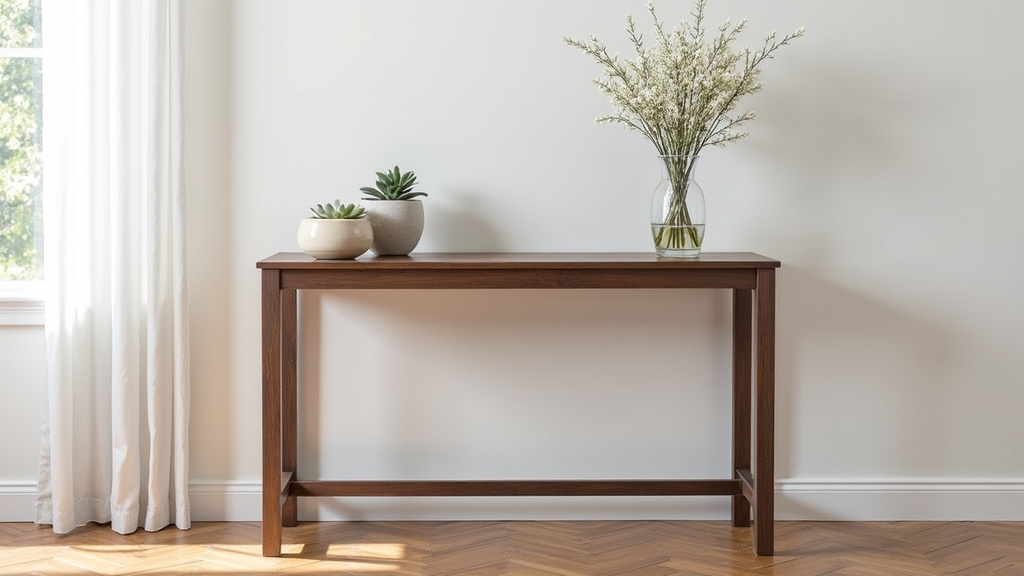
Finding the Right Console Table for Your Space
Before you buy, measure your space carefully. The ideal height is roughly the same as the back of your sofa or about 30-36 inches tall. For depth, 12-18 inches is standard for a narrow profile. Always leave at least 30-36 inches of walking path in front of it.
Consider your storage needs. Do you need drawers for hidden clutter, or open shelves for display? The material should fit your lifestyle—durable wood for high-traffic areas, a painted finish for a pop of color, or glass and metal for a light, modern look.
A console table isn’t just another piece of furniture. It’s a problem-solver. It can tame clutter, define your space, and add a layer of style that makes a house feel more like a home. By choosing the right one and placing it thoughtfully, you’re not just filling a space—you’re making it work harder for you.
Conclusion
So, what is a console table used for? As we’ve explored, the answer is wonderfully flexible. It’s not just a piece of furniture; it’s a smart solution for everyday life. Whether you need to tame entryway clutter, add a layer of light behind your sofa, or create a stylish spot for your keys, this slim table steps up. It works quietly in the background to organize your space and enhance your home’s style. Now, the next step is simple: **measure your spot** and consider what you truly need it to do. Then, you can find the perfect console that makes your space work harder for you.
Frequently Asked Questions
What’s the difference between a console table and a sofa table?
Functionally, there is very little difference. The term “sofa table” simply describes a console table placed behind a sofa. A console table is the more general term for any long, narrow table meant to stand against a wall or behind furniture in a hallway, entryway, or living room.
How deep should a console table be?
Most console tables have a depth between **12 and 18 inches**. This slim profile is key to fitting into tight spaces like hallways. Always measure your area and ensure you leave at least **30-36 inches of walking space** in front of the table for easy passage.
Can I use a console table as a desk in a small space?
Absolutely. A narrow console table is an excellent choice for a compact home office. Its shallow depth prevents you from spreading out, which can boost focus. Choose one with a drawer to store your laptop, notebook, and pens at the end of the workday.
What should I put on a console table in a hallway?
In a hallway, focus on a mix of **display and function**. A decorative tray can hold outgoing mail or keys. Add a lamp for light, a small plant for life, and hang a mirror or art above it to make the space feel larger and more welcoming.
Is a console table sturdy enough to hold a TV?
This depends on the table’s construction and the TV’s size and weight. Most standard console tables are not designed to support a television. They are meant for lamps, decor, and light storage. Always check the weight limit and stability before placing a TV on one.